
In a world where popular culture often dominates the airwaves, the Choral Indigenous Music Awards (CIMA) rise as a powerful and necessary platform one dedicated to preserving, celebrating, and elevating Africa’s rich choral and indigenous musical heritage. Rooted in tradition yet boldly contemporary in vision, CIMA is more than an awards ceremony; it is a cultural movement that speaks to identity, memory, spirituality, and community.
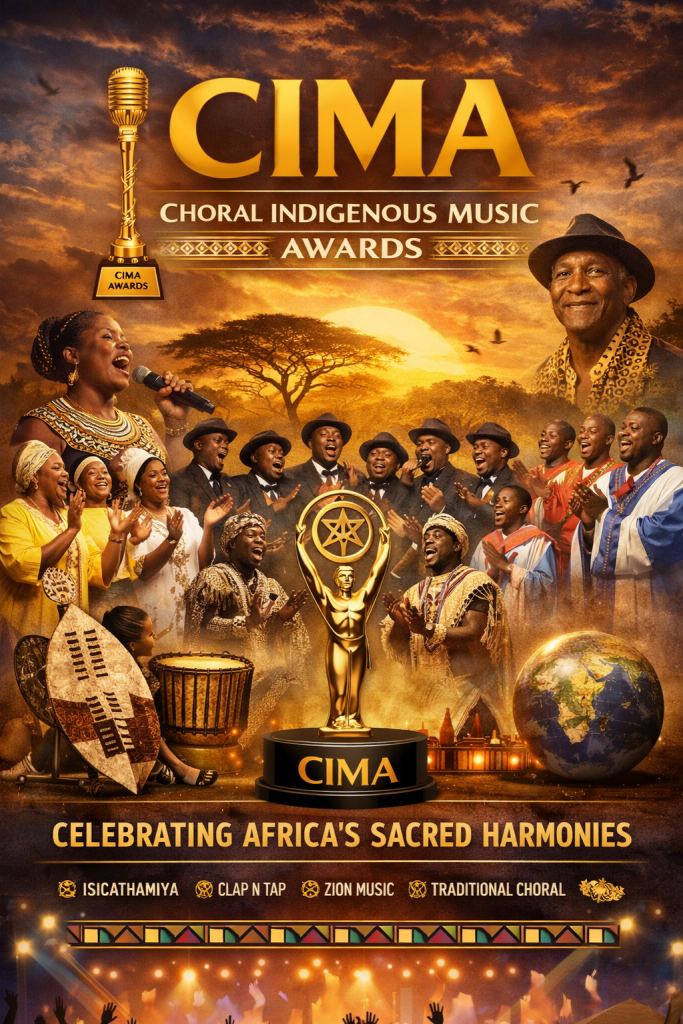
Founded in South Africa, CIMA was established to honour composers, arrangers, conductors, choirs, producers, and cultural practitioners who have dedicated their lives to choral indigenous music forms that have shaped African societies for generations. These include genres such as Isicathamiya, Amadodana, Zion music, Clap n Tap, Imizwilili, Traditional choral music, and other sacred and community-based vocal expressions that continue to inspire, heal, and unite people.
A Response to Cultural Erasure and Industry Neglect
Despite their deep historical and social significance, choral and indigenous music genres have long been marginalised within the mainstream music industry. Artists working in these traditions often struggle with limited exposure, lack of funding, inadequate documentation, and minimal recognition on global platforms. CIMA was born out of a need to correct this imbalance.
The awards aim to restore dignity, visibility, and economic value to choral indigenous music while ensuring that these art forms are not lost to future generations. By formally recognising excellence and innovation within the genre, CIMA positions indigenous choral music as a living, evolving cultural force worthy of global respect and institutional support.
More Than an Awards Night
CIMA is intentionally designed as a multi-layered cultural initiative, not a single-night spectacle. Each annual edition includes:
- Community Outreach Programs, particularly focused on reviving choral music in schools and communities
- Music Workshops and Seminars, offering skills development, mentorship, and knowledge exchange
- A Gala Dinner, bringing together artists, cultural leaders, policymakers, and partners
- The Main Awards Ceremony, celebrating artistic excellence and lifetime contributions
This holistic approach ensures that CIMA contributes to capacity building, education, and social cohesion, while also creating opportunities for intergenerational dialogue between legends and emerging talent.
Strategic Cultural Timing
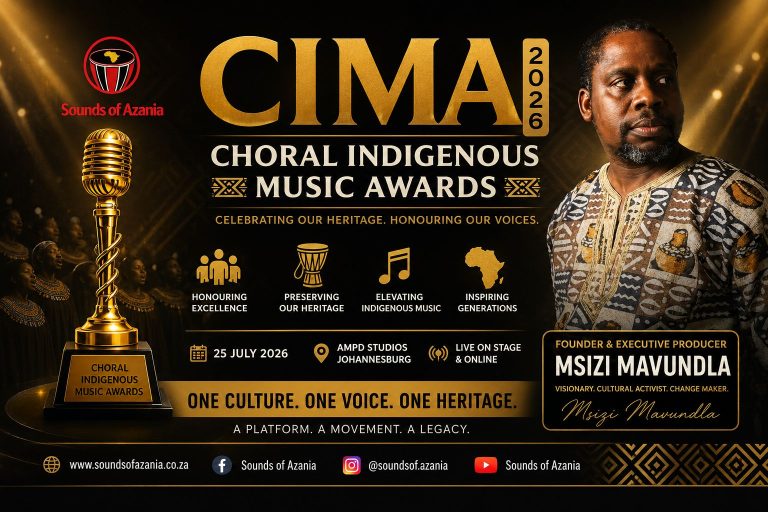
CIMA is strategically aligned with significant moments in South Africa’s national and social calendar. The awards are hosted annually in connection with Freedom Day (27 April) symbolising cultural liberation and identity and World AIDS Day (December), using music as a tool for awareness, healing, and solidarity. Through this alignment, CIMA reinforces the role of culture in addressing social challenges and promoting nation-building.
Honouring Excellence Across Africa and the Diaspora
CIMA’s award categories reflect both artistic depth and cultural diversity. These include recognitions such as:
- Best Imizwilili Award
- Best Clap n Tap Award
- Best Traditional Choral Award
- Best Zion Music Award
- Best Amadodana Award
- Best Isicathamiya Award
- Best Newcomer Award
- Best Video / Live Audio Visual Award
- Mzilikazi Khumalo Award for Best Composer/Arranger
- Best Choral Event Award
- Joseph Shabalala Award for International Achievement
- Lifetime Achievement Award
- Best of Africa Award
- Group of the Year
- Album of the Year
- Best Choral Indigenous Music Award
Through these categories, CIMA not only celebrates performance excellence but also honours composition, innovation, cultural leadership, and international impact.
A Pan-African and Global Vision
While proudly South African in origin, CIMA carries a pan-African vision. The awards seek to connect Africa with its diaspora, creating cultural bridges across borders and continents. African choral music has influenced global genres, spiritual movements, and academic discourse yet its originators are often left out of global narratives. CIMA aims to change that by positioning African choral indigenous music on the world stage.
International partnerships, cultural exchanges, media collaborations, and academic linkages form part of CIMA’s long-term strategy. The goal is clear: to make choral indigenous music exportable, sustainable, and globally respected, without diluting its authenticity.
Music as a Tool for Healing and Unity
At its core, CIMA believes in the transformative power of music. Choral indigenous music has historically been used for worship, resistance, storytelling, mourning, celebration, and healing. In communities affected by poverty, inequality, and social fragmentation, these musical traditions continue to serve as a source of hope and collective strength.
By amplifying these voices, CIMA contributes to social cohesion, mental and spiritual well-being, and cultural pride particularly among young people seeking identity and purpose in a rapidly changing world.
An Invitation to the World
The Choral Indigenous Music Awards invite the world to listen deeply and respectfully to Africa’s harmonies. They invite institutions, sponsors, governments, educators, and cultural practitioners to invest in a genre that carries the soul of a people.
CIMA is not just about trophies and applause. It is about legacy, preservation, empowerment, and cultural justice.
As the world searches for authentic stories and meaningful cultural connections, CIMA stands as a beacon proving that Africa’s indigenous choral music is not of the past, but very much the sound of the present and the future.
About the Author



Hi, this is a comment.
To get started with moderating, editing, and deleting comments, please visit the Comments screen in the dashboard.
Commenter avatars come from Gravatar.